Full approval for Everysdi and Spinraza -YOU DID IT
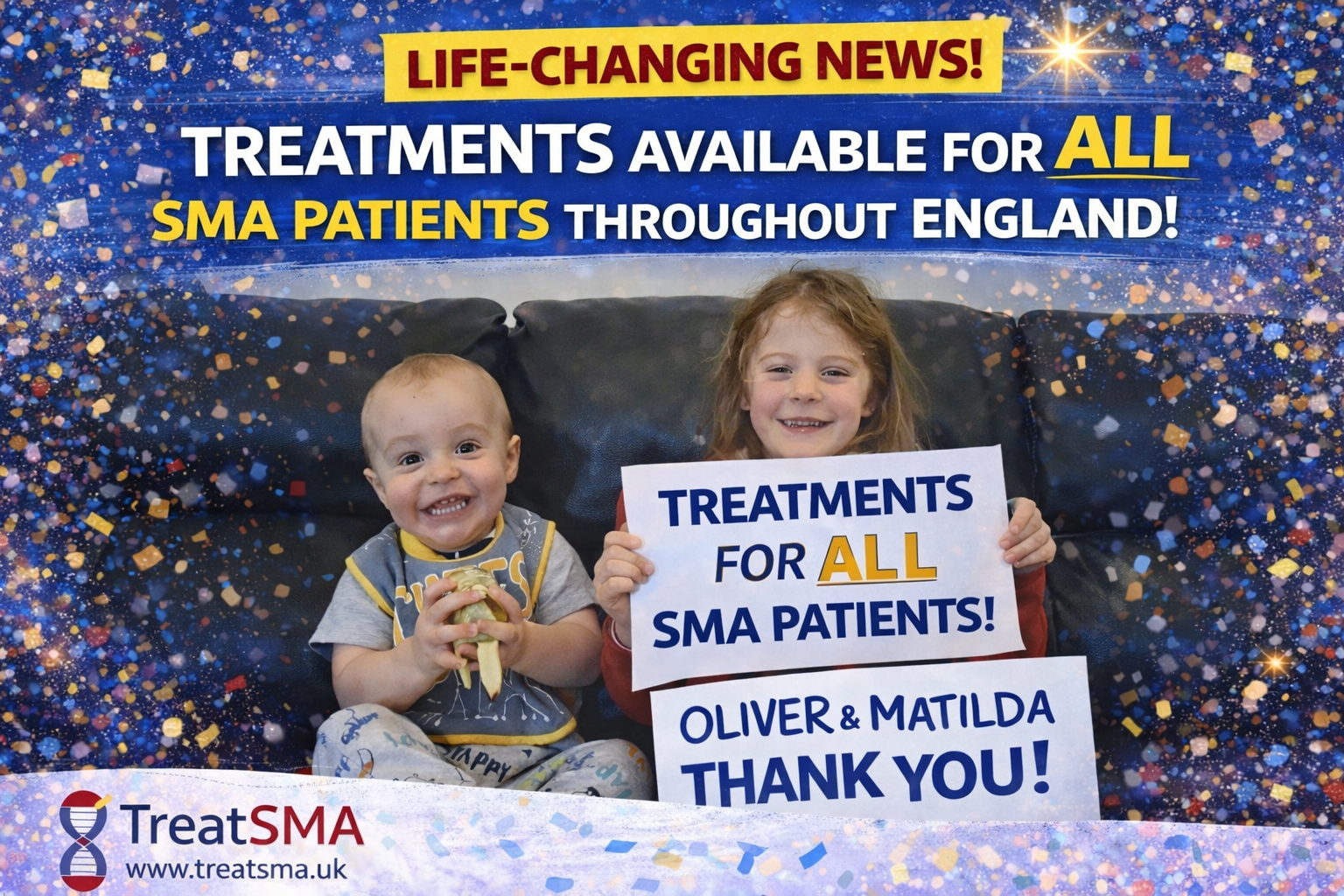
Historic NICE Decision Secures NHS Access to SMA Treatments After Decade Long Campaign - WE HAVE DONE IT!
People living with spinal muscular atrophy across the United Kingdom are celebrating a historic milestone after the National Institute for Health and Care Excellence confirmed that two major treatments for the condition can now be used within the NHS.
Following a meeting of the NICE technology appraisal committee on 3 February 2026, and a number of further discussions throughout February and March, the medicines nusinersen (Spinraza) and risdiplam (Evrysdi) have been approved as treatment options for all people with 5q spinal muscular atrophy.
The decision marks the culmination of one of the most determined patient advocacy campaigns ever seen in the United Kingdom for a rare disease.
TreatSMA, a charity led by members of the SMA community, has spent more than a decade working with patients, clinicians, and policymakers to secure access to treatments capable of changing the course of the disease.
Trustee and founder of TreatSMA Lucy Frost said, "This decision will change lives. It also proves that determined communities can help shape the future of healthcare." about the news. Co-founder, also a trustee, Gennadiy Ilyashenko, added "For many families this decision represents something we once feared we would never see. A future where spinal muscular atrophy is no longer defined by the absence of treatment but by the presence of real medical progress. However, the battle doesn’t end here, there are further scientific breakthroughs on the horizon as well as a continued lack of understanding about the condition as well as massive gaps in social care leaving some struggling to get the most benefit from the treatments."
Andi Thornton, another long-term trustee for the charity, and who has focused heavily on the advocacy for treatment for adults of all ages, said "The campaign led by TreatSMA shows what is possible when patient voices are heard. Evidence matters, but lived experience matters just as much. Representing the community in discussions with NICE, NHS England and the MHRA has been an absolute privilege, and this announcement makes it all worthwhile."
The decade-long campaign led by TreatSMA is widely regarded as one of the most influential rare disease advocacy movements in the United Kingdom and has helped reshape how patient voices are represented in healthcare decision making as well as how the benefits of treatment for such conditions are measured against cost effectiveness. “Had we not fought at the very beginning to change the rules of engagement around how rare condition treatments are assessed, this would be a very different story. This is a truly historic moment!”